Surviving Family Law Assessments
Some of the most difficult calls SiSi receives are from women involved in family law proceedings who feel there is no way out. For many, the court journey begins when they seek protection after reporting domestic violence or call An Garda Síochána for help. Frontline services often direct women toward the courts to seek protective orders, and reports of domestic violence frequently trigger mandated referrals to Tusla, Child Protection and Welfare.
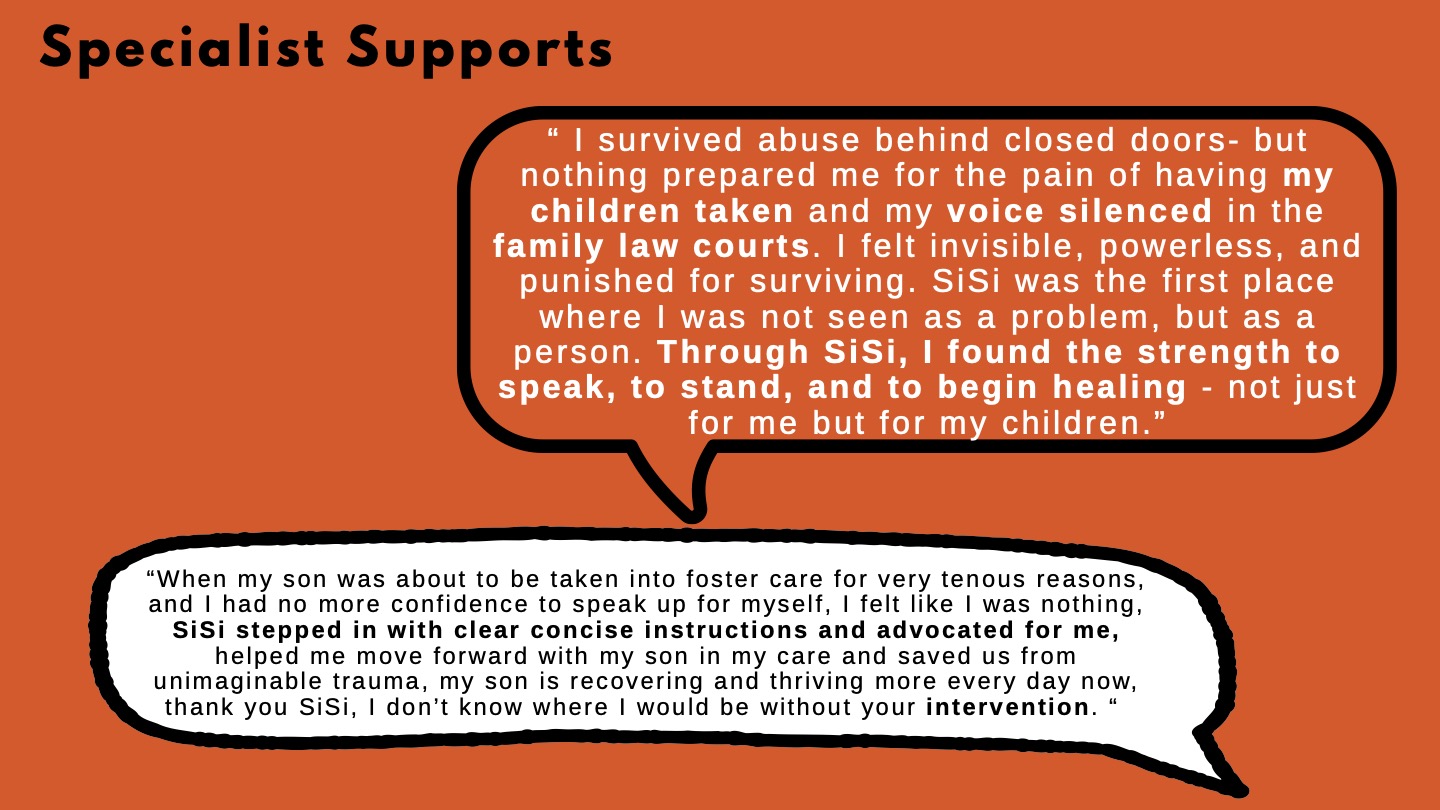
Other women contact SiSi after leaving a relationship they believe was simply unhappy rather than abusive. They may begin the separation process expecting matters to remain civil, but as finances, housing and parenting arrangements are negotiated, previously covert patterns of coercive control emerge. Post-separation abuse often escalates, with perpetrators attempting to maintain control through the children.
We also hear from women who recognise early warning signs in their relationship but share a child with a former partner and must continue parenting alongside someone who treats them badly and may harm or manipulate children in order to distress their mother.
SiSi supports women throughout what we call the “Marathon Leave to Freedom” as they navigate multiple complex systems including the legal process, securing safety and shelter, and learning how to communicate their experiences so that risk assessments accurately capture the reality of abuse. Most women we hear from simply want to feel safe and to know their children are safe so they can move on and rebuild their lives.
Within the family court process, judges often request Section 32, Section 47 or Section 20 reports to examine family circumstances and ascertain the views of the child. In practice, these reports are increasingly becoming one of the most dangerous stages of the legal process for women and children experiencing abuse.
For many survivors, the process is not as simple as telling the truth and trusting that justice will follow. Domestic violence and child abuse are frequently minimised or overlooked by assessors, while children’s reluctance, resistance or refusal to see an abusive parent is reframed as parental alienation. Perpetrators may claim alienation even where there is significant evidence of abuse, leaving survivors at risk of having their experiences minimised, dismissed or misrepresented.
Family courts often appear to operate from the assumption that it is always in a child’s best interests to maintain a relationship with both parents, including a parent who has been abusive. This assumption relies on the mistaken belief that abuse stops after separation, when in reality it often escalates or simply changes form. Evidence from mothers and children may be ignored or manipulated in reports in order to recommend continued contact with the abusive parent.
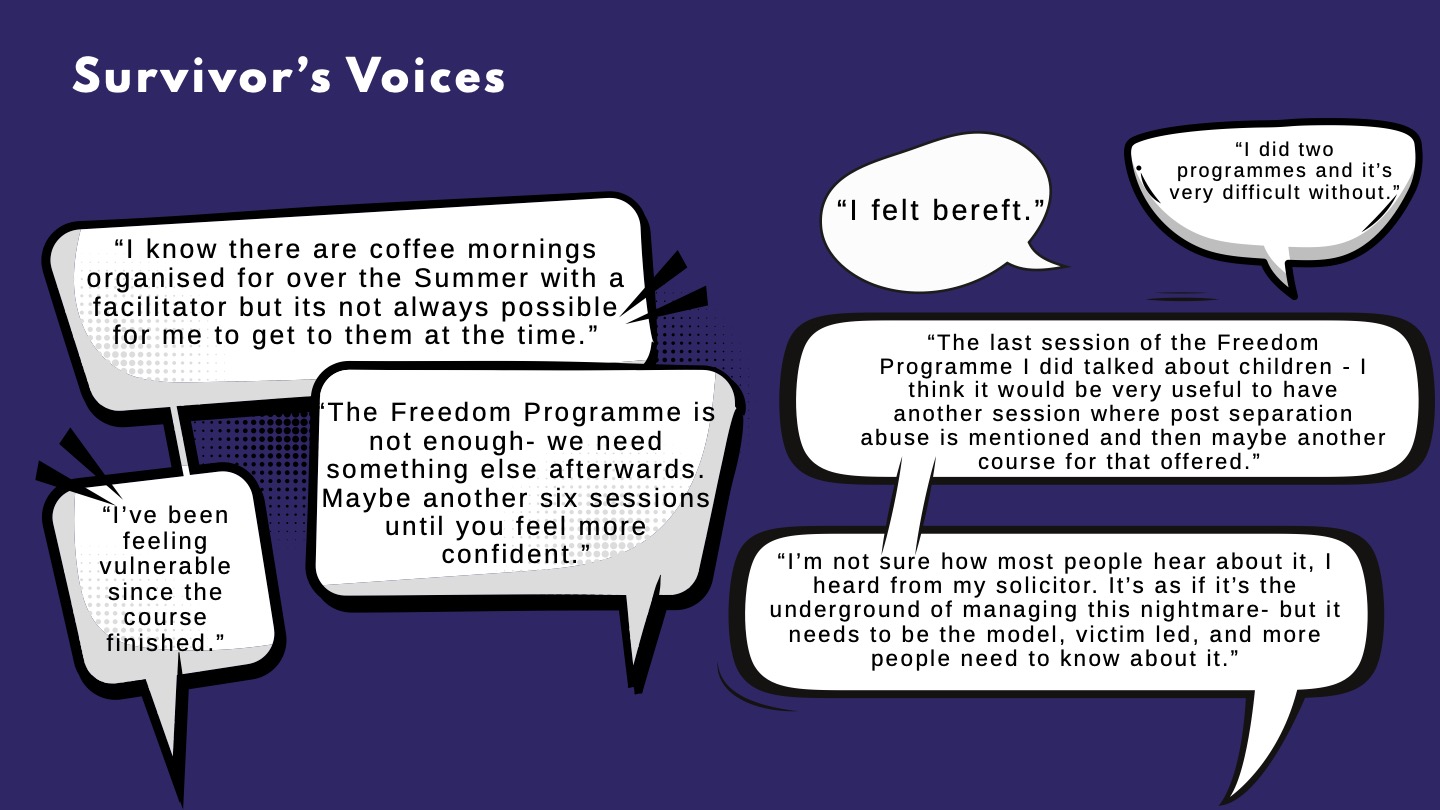
SiSi’s collective experience shows that mentorship and peer support can significantly shorten a survivor’s journey to freedom and improve outcomes for women and their children. Survivor leadership is central to this work. Women who live through coercive control and navigate systems with clarity are uniquely placed to walk alongside others, advocate when possible, and speak up when systems fail, because we understand the road survivors are travelling.
“Marathon leave to freedom”